RFID in Energy & Utilities: Traceability, Safety and Efficiency in Critical Assets
The technology RFID (Radio Frequency Identification) drives the digital transformation of companies in energy, electrical networks, water and gas utilities, offering unit traceability and real-time visibility of equipment, spare parts and tools in plants, substations and field operations.
Thanks to automatic, contactless identification, it is possible to monitor location, status, inspection history, calibrations and lifecycle of critical assets, reducing manual errors and improving regulatory compliance in high-criticality environments.
Operational Optimization with RFID: Predictive Maintenance, EAM/CMMS and Service Continuity
The integration of RFID systems with EAM/CMMS platforms and IoT analytics enables intelligent lifecycle management of assets: automatic inventories, consumption reconciliation, work evidence and predictive maintenance based on condition and context.
This end-to-end connectivity accelerates receiving and consignments, prioritizes interventions based on SAIDI/SAIFI, reduces field deployments and strengthens operational safety, increasing network availability and service quality.
Energy and utilities sectors with RFID
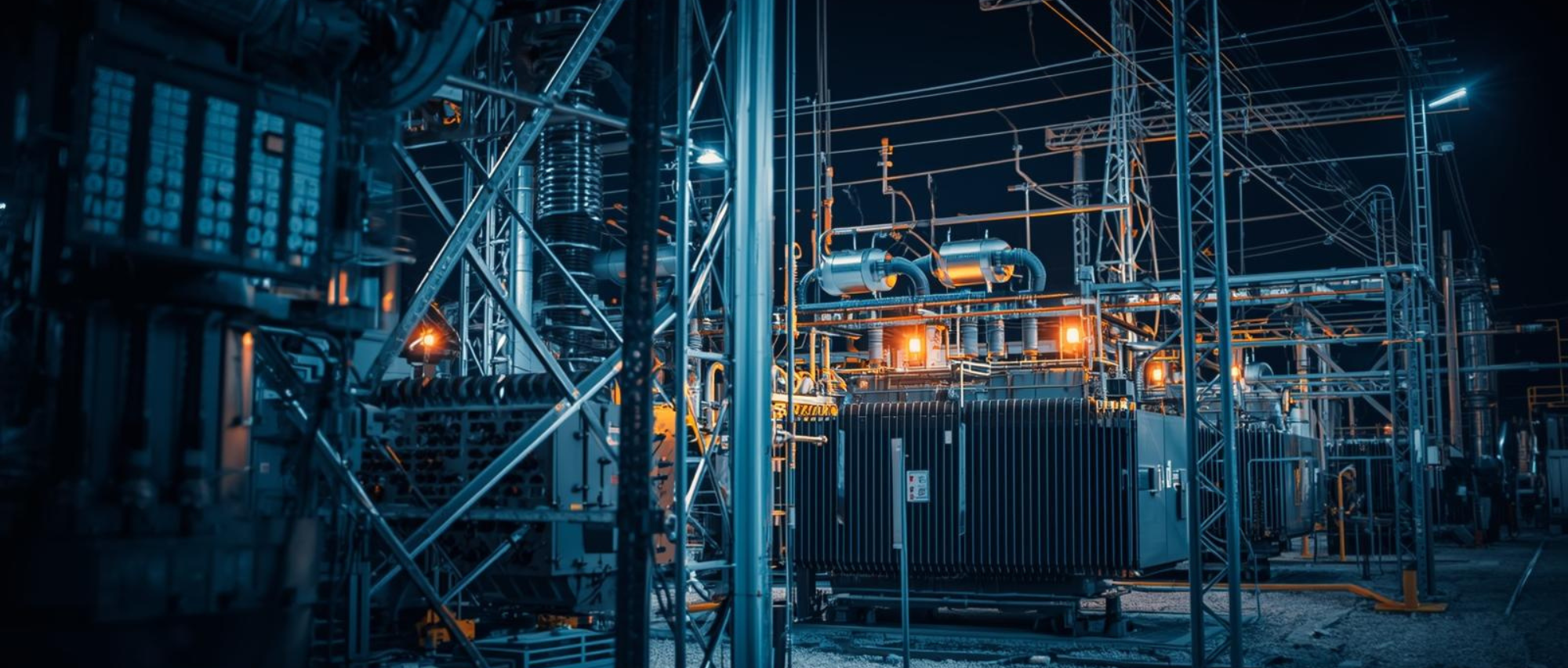
RFID in Power Plants and Substations
RFID provides operational visibility over critical assets (transformers, breakers, relays, spare parts, PPE and tools) in plants and substations.
Each item is uniquely identified, enabling control of its location, condition and traceability of inspections, calibrations and field tests.
Contactless bulk reading accelerates receiving, inventories and consignments, while EAM/CMMS integration records work orders and certifies executed tasks.
Result: fewer outages, compliant documentation and better asset utilization in high-criticality environments.
RFID in Electrical Networks & Predictive Maintenance
Across transmission and distribution, RFID links each linear or point asset—poles, reclosers, switches, meters, capacitor banks—to its technical history and georeference.
Field crews validate interventions with mobile readers, removing paperwork and avoiding identification errors.
Combining RFID with analytics and sensors enables predictive maintenance: correlating incidents, load cycles and environmental conditions to prioritize replacements and visits.
SAIDI/SAIFI improves, truck rolls decrease and operational safety is reinforced.
RFID in Water and Gas Utilities
RFID controls meters, valves, intervention kits, reagents and spare materials from central warehouse to field crews.
Serial and batch traceability simplifies audits, consumption reconciliation and control of expiry dates and certifications.
Readings on service trucks and remote depots provide real-time inventory, reduce losses and ensure availability in emergencies.
Linking assets to work orders improves service billing and compliance with safety protocols.
In PV and wind, RFID identifies modules, inverters, string boxes, blades and tower components from civil works through to operations.
It accelerates commissioning, documents serial-based warranties and shortens diagnostics for failures or replacements.
Unit-level traceability supports periodic inspections, spares control and management of working-at-height tools/PPE.
With real-time asset inventory and condition, the maintenance plan is optimized, downtime decreases and plant integrity is assured.
Optimize industrial processes with automatic traceability and ERP/MES synchronization. Greater control, security, and efficiency at every stage of production.

Kyubi System RFID drives traceability in airports and air fleets: predictive maintenance, error-free baggage management, and control of critical materials with total precision.